Level Marketing / Articles / Reels and video
How ad creatives are produced: from idea to finished video
In advertising the biggest difference is often made not by budget but by the creative. With the same audience and budget, one video can bring leads at half the cost while another burns money. A good creative isn't luck — it's the result of a clear process. This article follows an ad creative from idea to finished video: what happens at each stage and what the business side needs to prepare.

What a creative is and why it matters so much
A creative is what people see in an ad: a video, image, carousel or text. Today Meta and other platforms largely find the audience themselves, so the creative does two jobs:
- holds attention — does the viewer stop in the first 1–3 seconds or scroll past;
- selects the audience — whoever the video speaks to, the algorithm finds more people like them.
That makes the creative the most powerful "targeting setting" you have.
The 7 stages of creative production
| Stage | What happens | Output |
|---|---|---|
| 1. Brief | Goal, product, audience, offer | A clear task |
| 2. Insight | Customer pains, questions, objections | The basis for the creative |
| 3. Idea | Several approaches and hooks | 3–5 concepts |
| 4. Script | Shots, voiceover, on-screen text | A shooting plan |
| 5. Shoot | Video, photo, 3D visuals | Raw material |
| 6. Edit | Cutting, subtitles, music, formats | Finished creatives |
| 7. Test and refresh | A/B tests, results analysis | A winning creative and new ideas |
Stages 1–2. Brief and insight
A good creative starts with understanding the customer. These help:
- questions in DMs and on calls — what customers ask most often;
- objections — "too expensive", "not reliable", "later";
- reviews — what customers praise and complain about;
- sales managers — which line closes the deal.
The most valuable thing the business can give at this stage is a 10–15 minute chat with the sales team. More on audiences — target audience and customer persona.
Stage 3. Idea and hooks
One product can be approached in several ways:
- problem → solution: start with the customer's pain;
- result: a "before / after";
- expert: a specialist answers a question;
- social proof: a customer review or case;
- process: how the product is made or the service delivered;
- offer: a specific promotion or bonus.
Each idea gets 2–3 hooks. Examples — Reels hooks.
Stage 4. Script
A script saves time on shoot day. It sets out:
- what each shot shows;
- who speaks and what they say;
- what text appears on screen;
- the call to action at the end.
A simple structure for an ad video: hook (1–3 s) → problem or intrigue → solution or product → proof → offer and call to action. Ready-made templates — Reels script templates.
Stage 5. Shoot
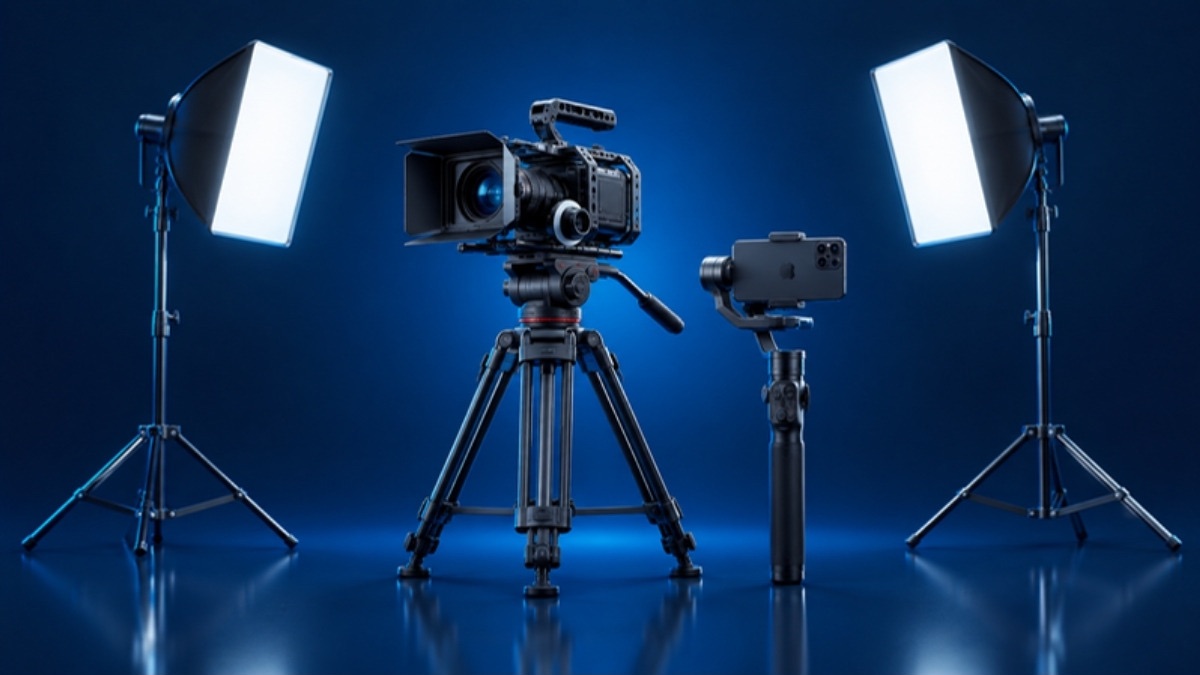
A creative doesn't always need an expensive studio. Choose the format by the goal:
| Format | When it fits | Notes |
|---|---|---|
| UGC-style on a phone | When trust and authenticity matter | Fast and cheap — shooting Reels on a phone |
| Professional video | Brand, premium product | High quality, more preparation |
| Expert interview | Complex services | Trust and explanation |
| 3D visuals | Product not built yet, internal structure, a "wow" effect | No shoot needed |
| Product video | Online sales | Details and usage — product video mistakes |
It's efficient to capture material for several creatives on one shoot day: different hooks, different speakers, different angles.
Stage 6. Edit
The edit decides a creative's fate:
- the first seconds — the strongest shot goes first;
- subtitles — many people watch with the sound off;
- pace — dead pauses are cut;
- formats — 9:16 for Reels and Stories, 4:5 for the feed, 1:1 if needed;
- variations — 2–3 versions of one video with different hooks.
Editing tools — video editing apps.
Stage 7. Test and refresh
Work doesn't end at launch:
- 3–5 creatives run at the same time;
- results are compared: view retention, CTR, cost per lead, quality;
- new variations are built on the winner;
- when the audience tires (metrics drop), the creative is refreshed.
How to run tests properly — A/B testing ad creatives.
What the business needs to provide
- Fast approvals — if scripts and finished videos are approved in 1–2 days, creatives go out on time.
- Access — office, production floor, store, product.
- Speakers — the owner, a specialist or an employee on camera.
- Real facts — prices, terms, warranties; prices in ads must be in so‘m — advertising law in Uzbekistan.
- Customer reviews — with permission.
Common mistakes
- Running one creative for months.
- Opening without a hook, with a logo or a long intro.
- Videos without subtitles.
- Trying to say everything in one video.
- Chasing only a "beautiful" video and not measuring results.
- Dragging approvals out for weeks.
Questions and answers
How many creatives do I need per month?
It depends on budget and channel, but usually 3–5 creatives run at once and several new ones are added each month. With a small budget, fewer — but regular refreshes still matter.
Is professional video better than phone footage?
It depends on the goal. Simple, authentic phone videos often perform well in ads. For a premium brand, professional quality matters.
How long does a creative take?
With an approved script and material in hand, a simple Reel can be ready in a day or two. Complex videos and 3D take longer.
When are 3D visuals worth it?
When the product doesn't exist yet (for example, a construction project), when you need to show internal structure, or to stand out in the feed.
Conclusion
A strong creative is the result of a process: brief, insight, idea, script, shoot, edit and test. One good idea becomes several variations, results are measured and the winning formats are amplified. Level Marketing's team includes videographers, designers and a 3D visualiser, and a Reel is ready in 48 hours — so creatives are refreshed at the speed advertising demands.